



Table of Contents
Why Choose Ethical Hacking as a Career in 2026? Who Can Learn Ethical Hacking? (Eligibility Explained) Minimum Educational Qualifications Required Is a Computer Science Degree Necessary? Required Technical Skills Before Starting Basic Knowledge of Programming Languages Networking Fundamentals You Must Know Importance of Operating Systems Knowledge (Linux/Windows) Do You Need Certifications Before Starting? Top Ethical Hacking Certifications in 2026 Age Limit for Ethical Hacking Courses Eligibility for Online Ethical Hacking Courses Eligibility for Government & University Programs Can Non-Technical Students Learn Ethical Hacking? Skills That Give You an Advantage in Ethical Hacking Soft Skills Required for Ethical Hackers Tools & Software You Should Be Familiar With Legal Requirements & Ethical Guidelines Beginner-Friendly Learning Path for 2026 Duration of Ethical Hacking Courses Fees Structure Based on Eligibility & Course Type Career Opportunities After Meeting Eligibility Common Mistakes Beginners Should Avoid Conclusion:Ethical hacking refers to legally testing systems, networks, and applications to find security vulnerabilities before malicious hackers exploit them. Ethical hackers, also known as white-hat hackers, use the same tools and techniques as cybercriminals—but for defensive purposes. In 2026, ethical hacking is a critical part of cybersecurity, helping organizations protect sensitive data. It involves penetration testing, vulnerability assessment, and risk analysis. This field is growing rapidly, making it a popular career choice for tech enthusiasts interested in security and problem-solving.
Why Choose Ethical Hacking as a Career in 2026?
Ethical hacking is one of the most in-demand careers in 2026 due to rising cyber threats and data breaches. Companies across industries need skilled professionals to safeguard their systems. The career offers high salaries, global opportunities, and continuous learning. With digital transformation accelerating, ethical hackers are essential for securing cloud systems, IoT devices, and AI-driven platforms. Additionally, it offers flexible career paths, including freelancing and bug bounty programs. If you enjoy challenges and critical thinking, ethical hacking can be a rewarding and future-proof profession.
Read More: How to Become an Ethical Hacker
Who Can Learn Ethical Hacking? (Eligibility Explained)
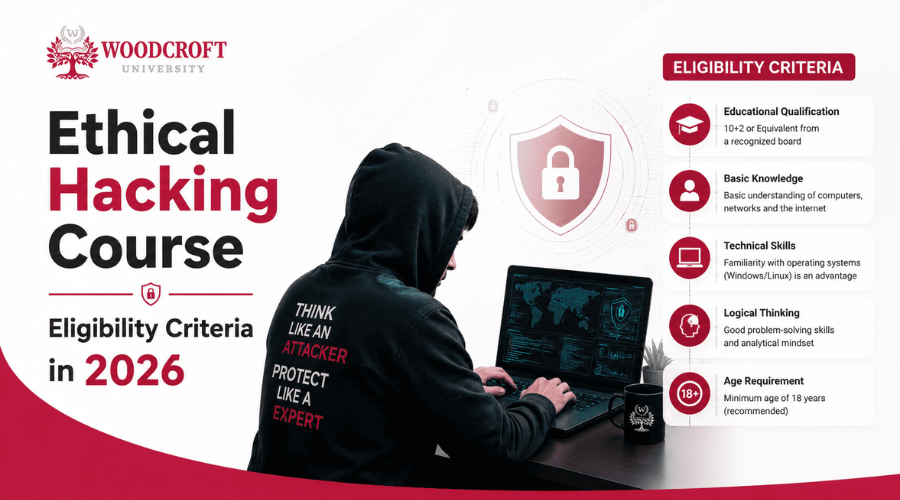
Anyone with an interest in cybersecurity can learn ethical hacking. There are no strict barriers to entry in 2026, making it accessible to students, IT professionals, and even non-technical learners. However, having basic computer knowledge is beneficial. Beginners should be willing to learn networking, programming, and operating systems. Many online courses are designed for absolute beginners, while advanced programs require prior technical knowledge. The key eligibility factor is curiosity and a willingness to continuously learn and practice.
Minimum Educational Qualifications Required
There is no mandatory degree required to start ethical hacking, but a background in computer science or IT can be helpful. Many entry-level courses accept students who have completed 10+2 (high school). For advanced certifications, a bachelor’s degree in fields like computer science, information technology, or cybersecurity is often preferred. However, in 2026, skill-based hiring is becoming more common, meaning practical knowledge and certifications can outweigh formal education. This opens doors for self-taught learners and career switchers.
Is a Computer Science Degree Necessary?
A computer science degree is not strictly necessary to become an ethical hacker. While it provides a strong foundation in programming, networking, and systems, many successful ethical hackers are self-taught or come from different backgrounds. In 2026, employers focus more on skills, certifications, and hands-on experience than degrees. Platforms offering practical labs and real-world simulations have made it easier to learn without formal education. However, having a degree can still provide an advantage in structured learning and job opportunities.
Required Technical Skills Before Starting
Before diving into ethical hacking, it’s helpful to have basic technical skills. Understanding how computers work, familiarity with operating systems, and basic troubleshooting knowledge are essential. You should also know how to use the command line and understand file systems. These foundational skills make it easier to grasp advanced concepts like penetration testing and vulnerability scanning. While beginners can start from scratch, having these skills will accelerate your learning and help you build confidence in practical environments.
Basic Knowledge of Programming Languages
Programming knowledge is not mandatory but highly beneficial for ethical hackers. Languages like Python, JavaScript, and C are commonly used in cybersecurity. Python is especially popular for automation and scripting tasks. Understanding programming helps you analyze code, identify vulnerabilities, and create custom tools. In 2026, ethical hackers are expected to have at least basic scripting skills. Even if you’re a beginner, learning one programming language can significantly improve your efficiency and problem-solving abilities in ethical hacking.
Networking Fundamentals You Must Know
Networking is a core concept in ethical hacking. You should understand how data travels across networks, including concepts like IP addresses, DNS, HTTP/HTTPS, and TCP/IP protocols. Knowledge of routers, switches, and firewalls is also important. These fundamentals help you identify weaknesses in network security and perform penetration testing effectively. In 2026, with cloud computing and remote work environments expanding, networking knowledge is more crucial than ever for aspiring ethical hackers.
Importance of Operating Systems Knowledge (Linux/Windows)
A strong understanding of operating systems, especially Linux and Windows, is essential for ethical hacking. Linux is widely used in cybersecurity due to its flexibility and powerful tools like Kali Linux. Windows knowledge is equally important since many organizations use it in enterprise environments. Knowing how operating systems manage files, processes, and permissions helps you identify vulnerabilities. In 2026, ethical hackers must be comfortable navigating multiple operating systems to perform security testing effectively.
Do You Need Certifications Before Starting?
You don’t need certifications to start learning ethical hacking, but they can boost your credibility and career prospects. Certifications like CEH (Certified Ethical Hacker), CompTIA Security+, and OSCP are widely recognized. In 2026, certifications act as proof of your skills and knowledge, especially for beginners without experience. Many learners start with free or beginner-friendly courses before pursuing certifications. While not mandatory, certifications can significantly improve your chances of getting hired and advancing in the cybersecurity field.
Top Ethical Hacking Certifications in 2026
In 2026, certifications play a key role in validating your ethical hacking skills. Popular options include CEH (Certified Ethical Hacker), CompTIA Security+, OSCP (Offensive Security Certified Professional), and CISSP for advanced professionals. These certifications cover penetration testing, network security, and risk management. Beginners can start with entry-level certifications, while experienced learners can pursue advanced ones. Choosing the right certification depends on your career goals. Recognized credentials improve job opportunities and credibility in the cybersecurity industry.
Age Limit for Ethical Hacking Courses
There is no strict age limit to learn ethical hacking. Anyone from school students to working professionals can start. Most online platforms allow learners as young as 15–16 years old, while professional certifications may require candidates to be at least 18. In 2026, the focus is on skills rather than age. Early learners often gain an advantage by starting young, but even adults can successfully transition into cybersecurity careers with proper dedication and training.
Eligibility for Online Ethical Hacking Courses
Online ethical hacking courses are highly flexible and accessible. Most platforms do not require formal qualifications, making them ideal for beginners. Basic computer knowledge and internet access are usually sufficient. Some advanced courses may recommend prior knowledge of networking or programming. In 2026, online learning platforms offer hands-on labs, real-world scenarios, and certifications. This makes it easier for learners worldwide to gain practical experience without attending physical classes.
Eligibility for Government & University Programs
Government and university-based ethical hacking programs often have stricter eligibility criteria. Typically, candidates need a bachelor’s degree in computer science, IT, or a related field. Some programs may require entrance exams or prior knowledge of cybersecurity concepts. In 2026, universities are updating their curricula to include advanced topics like cloud security and AI-based threats. These programs are ideal for students seeking structured education and recognized degrees in cybersecurity.
Can Non-Technical Students Learn Ethical Hacking?
Yes, non-technical students can learn ethical hacking in 2026. Many beginner-friendly courses start with the basics of computing, networking, and security. While it may take extra effort to understand technical concepts, it is entirely possible with consistent practice. Many successful ethical hackers come from non-IT backgrounds. The key is to build foundational knowledge step by step and gain hands-on experience through labs and projects.
Skills That Give You an Advantage in Ethical Hacking
Certain skills can give you a competitive edge in ethical hacking. These include problem-solving, analytical thinking, and attention to detail. Technical skills like scripting, networking, and system administration are also valuable. Familiarity with cybersecurity tools and frameworks further enhances your profile. In 2026, employers look for candidates who can think like hackers and anticipate potential threats. Continuous learning and staying updated with the latest trends are essential for success.
Soft Skills Required for Ethical Hackers
In addition to technical expertise, soft skills are crucial for ethical hackers. Communication skills help in explaining vulnerabilities and solutions to non-technical stakeholders. Critical thinking and creativity are important for identifying hidden threats. Time management and teamwork are also valuable in professional environments. In 2026, ethical hackers often work in teams, making collaboration skills essential. Strong ethics and integrity are equally important, as the role involves handling sensitive information responsibly.
Tools & Software You Should Be Familiar With
Ethical hackers use various tools to identify vulnerabilities and test systems. Popular tools include Nmap, Wireshark, Metasploit, Burp Suite, and Kali Linux. These tools help in network scanning, packet analysis, and penetration testing. In 2026, automation and AI-powered tools are also becoming common. Learning how to use these tools effectively is a key part of ethical hacking training. Hands-on practice with these tools is essential for building real-world skills.
Legal Requirements & Ethical Guidelines
Ethical hacking must always be conducted legally and ethically. Professionals must have proper authorization before testing any system. Unauthorized hacking is illegal and can lead to serious consequences. In 2026, organizations follow strict cybersecurity laws and compliance standards. Ethical hackers must adhere to guidelines and maintain confidentiality. Understanding legal frameworks and ethical responsibilities is a critical part of becoming a professional ethical hacker.
Beginner-Friendly Learning Path for 2026
A structured learning path helps beginners succeed in ethical hacking. Start with basic computer knowledge, then move to networking and operating systems. Next, learn programming basics and cybersecurity fundamentals. After that, explore penetration testing and ethical hacking tools. Practice through labs, simulations, and real-world projects. In 2026, many platforms offer guided learning paths with certifications. Consistency and hands-on practice are key to mastering ethical hacking skills.
Duration of Ethical Hacking Courses
The duration of ethical hacking courses varies depending on the level and format. Short-term courses can last a few weeks, while comprehensive programs may take 6–12 months. Advanced certifications often require several months of preparation. In 2026, flexible learning options allow students to learn at their own pace. Online courses are especially popular due to their convenience and accessibility. Choosing the right course duration depends on your goals and availability.
Fees Structure Based on Eligibility & Course Type
Course fees for ethical hacking vary widely. Beginner courses may be affordable or even free, while advanced certifications can be expensive. University programs typically have higher fees compared to online courses. In 2026, many platforms offer subscription-based models and financial aid options. The cost often depends on course content, certification, and practical training. Investing in quality education can provide better career opportunities in the long run.
Career Opportunities After Meeting Eligibility
After meeting the eligibility criteria, numerous career opportunities open up in ethical hacking. Roles include penetration tester, security analyst, cybersecurity consultant, and network security engineer. In 2026, industries like finance, healthcare, and IT actively hire ethical hackers. Freelancing and bug bounty programs are also popular options. With experience, professionals can move into senior roles or specialize in advanced cybersecurity domains.
Common Mistakes Beginners Should Avoid
Beginners often make mistakes that slow their progress. These include skipping fundamentals, relying only on theory, and not practicing enough. Another common mistake is focusing on tools without understanding concepts. In 2026, ethical hacking requires both theoretical knowledge and practical skills. Avoid illegal activities and always follow ethical guidelines. Consistency, patience, and continuous learning are essential for success in this field.
Conclusion:
Ethical hacking is an accessible and rewarding career in 2026. There are minimal eligibility requirements, making it open to learners from diverse backgrounds. With the right mindset, basic technical knowledge, and dedication, anyone can start their journey. Certifications, skills, and practical experience matter more than formal education. If you are curious, willing to learn, and committed to ethical practices, you are ready to begin your ethical hacking journey today.
Frequently Asked Questions
"I am Brandon Johnson, a professional content writer who creates informative content about online education, digital learning platforms, and career-focused courses. I aim to help readers find the best opportunities in modern education."
Brandon Johnson