



Table of Contents
What is Data Analytics? Why Data Analytics is Important Today What Are the 4 Types of Data Analytics? Descriptive Analytics (What Happened?) What is Descriptive Analytics in Simple Words Real-Life Examples of Descriptive Analytics Common Tools Used for Descriptive Analytics Diagnostic Analytics (Why Did It Happen?) What is Diagnostic Analytics (Easy Explanation) Examples of Diagnostic Analytics in Daily Life How Businesses Use Diagnostic Analytics Predictive Analytics (What Might Happen?) What is Predictive Analytics (Beginner Guide) Real-Life Examples of Predictive Analytics How Predictive Analytics Helps in Decision Making Prescriptive Analytics (What Should You Do?) What is Prescriptive Analytics (Simple Explanation) Examples of Prescriptive Analytics Benefits of Using Prescriptive Analytics Difference Between All 4 Types of Data Analytics Which Type of Analytics Should You Use? Conclusion:What is Data Analytics?
Data analytics is the process of collecting, organizing, and analyzing data to find useful information. In simple words, it helps us understand facts and numbers so we can make better decisions. Today, almost every company uses data analytics to improve performance, understand customers, and grow faster. Whether it’s tracking sales, website visitors, or user behavior, data analytics plays a key role in turning raw data into meaningful insights.
Why Data Analytics is Important Today
In today’s digital world, data is everywhere. Businesses generate huge amounts of data every day. Data analytics helps companies make sense of this information. It allows them to identify trends, improve products, and make smarter decisions. Without data analytics, decisions are based on guesswork. With analytics, decisions are based on facts. That’s why companies like Google, Amazon, and Netflix rely heavily on data analytics.
What Are the 4 Types of Data Analytics?
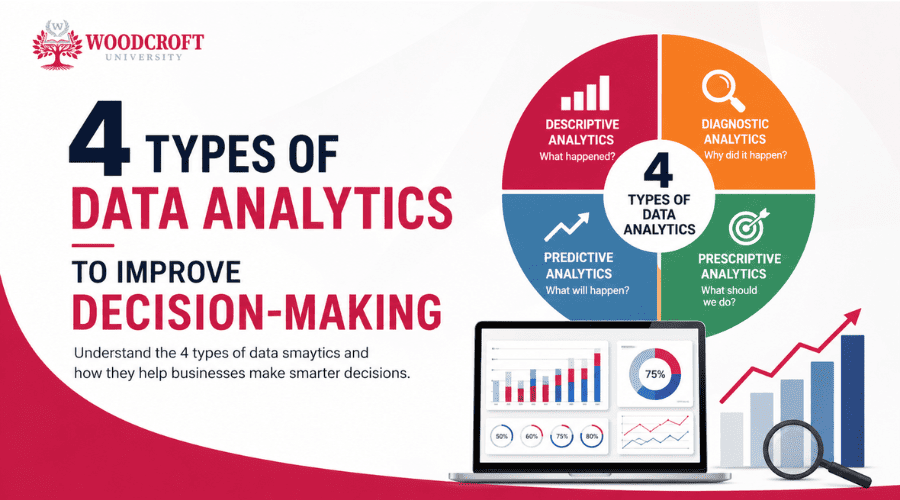
There are four main types of data analytics: descriptive, diagnostic, predictive, and prescriptive. Each type answers a different question. Descriptive analytics explains what happened. Diagnostic analytics explains why it happened. Predictive analytics tells what might happen in the future. Prescriptive analytics suggests what actions should be taken. Together, these four types help businesses understand data completely and make better decisions.
Descriptive Analytics (What Happened?)
What is Descriptive Analytics in Simple Words
Descriptive analytics is the simplest type of data analytics. It focuses on summarizing past data to understand what has already happened. For example, a company can analyze last month’s sales to see how well it performed. This type of analytics uses basic tools like reports, charts, and dashboards. It does not predict the future or explain reasons—it only shows past results clearly.
Real-Life Examples of Descriptive Analytics
Descriptive analytics is used everywhere in daily life. For example, when you check your bank statement, you are looking at descriptive data. When a website shows how many visitors it had last week, that is also descriptive analytics. Businesses use it to track sales, monitor performance, and measure results. Social media platforms also use descriptive analytics to show likes, shares, and comments.
Common Tools Used for Descriptive Analytics
Many tools are used for descriptive analytics. Popular tools include Microsoft Excel, Google Sheets, and dashboards like Power BI and Tableau. These tools help organize and visualize data using charts and graphs. Even beginners can use these tools easily. They are widely used because they make data simple and easy to understand without requiring advanced technical skills.
Diagnostic Analytics (Why Did It Happen?)
What is Diagnostic Analytics (Easy Explanation)
Diagnostic analytics goes one step further than descriptive analytics. It helps us understand why something happened. Instead of just showing results, it finds the reasons behind those results. For example, if sales dropped last month, diagnostic analytics will help identify the cause, such as poor marketing or seasonal trends. It uses techniques like data comparison, filtering, and drilling down into details.
Examples of Diagnostic Analytics in Daily Life
Diagnostic analytics is used in many real-life situations. For example, if your phone battery drains quickly, you check which apps are using the most power—that’s diagnostic thinking. Businesses use it to understand customer behavior, find problems, and improve performance. For instance, if a website’s traffic drops, companies analyze data to find the exact reason behind the decline.
How Businesses Use Diagnostic Analytics
Businesses use diagnostic analytics to solve problems and improve decisions. They analyze data to find patterns and identify issues. For example, if sales decrease, companies check customer data, marketing campaigns, and product performance. This helps them understand the root cause and take corrective actions. Diagnostic analytics is very useful for improving business strategies and avoiding mistakes.
Predictive Analytics (What Might Happen?)
What is Predictive Analytics (Beginner Guide)
Predictive analytics uses past data to predict future outcomes. It uses advanced techniques like machine learning and statistical models. For example, e-commerce websites suggest products based on your previous searches. That’s predictive analytics in action. It helps businesses forecast trends, understand customer behavior, and plan for the future. Although it is more complex than descriptive and diagnostic analytics, it provides powerful insights.
Real-Life Examples of Predictive Analytics
Predictive analytics is used in many apps and services you use daily. For example, online shopping websites suggest products based on your past searches. Streaming platforms recommend movies based on your watch history. Banks use predictive analytics to detect fraud by analyzing unusual transactions. Weather apps also use it to forecast future conditions. These examples show how predictive analytics helps in making smarter and faster decisions.
How Predictive Analytics Helps in Decision Making
Predictive analytics helps businesses make better decisions by forecasting future trends. Instead of guessing, companies use data to plan ahead. For example, businesses can predict customer demand, manage inventory, and improve marketing strategies. It reduces risks and improves efficiency. By understanding what might happen next, organizations can prepare in advance and stay ahead of competitors.
Prescriptive Analytics (What Should You Do?)
What is Prescriptive Analytics (Simple Explanation)
Prescriptive analytics is the most advanced type of data analytics. It not only predicts what might happen but also suggests what actions should be taken. In simple terms, it gives recommendations. For example, a navigation app suggests the best route based on traffic conditions. This type of analytics uses artificial intelligence and algorithms to provide smart solutions.
Examples of Prescriptive Analytics
Prescriptive analytics is widely used in modern technology. For example, GPS apps suggest the fastest route to reach your destination. Online platforms recommend what to buy next. Businesses use it to optimize pricing, improve supply chains, and increase profits. Healthcare systems use it to suggest treatments based on patient data. These examples show how it helps in making accurate decisions.
Benefits of Using Prescriptive Analytics
Prescriptive analytics offers many benefits. It helps businesses make quick and smart decisions. It improves efficiency, reduces risks, and saves time. Companies can optimize resources and increase profits. It also helps in solving complex problems by providing clear recommendations. Although it requires advanced tools and skills, the results are highly valuable for business growth.
Difference Between All 4 Types of Data Analytics
The four types of data analytics serve different purposes. Descriptive analytics tells what happened. Diagnostic analytics explains why it happened. Predictive analytics forecasts what might happen. Prescriptive analytics suggests what action to take. Together, they provide a complete understanding of data. Each type builds on the previous one, making data analysis more powerful and useful.
Also Read: 5 Types of Data Analytics
Which Type of Analytics Should You Use?
The choice depends on your needs. If you want to understand past data, use descriptive analytics. If you want to find reasons behind results, use diagnostic analytics. If your goal is to predict future trends, predictive analytics is best. And if you want recommendations for action, prescriptive analytics is the right choice. Many businesses use all four types together for better results.
Conclusion:
Data analytics is essential in today’s world. The four types—descriptive, diagnostic, predictive, and prescriptive—help us understand data at different levels. From analyzing past data to making future decisions, each type plays an important role. By learning these concepts, beginners and professionals can improve their skills and make smarter decisions. Data analytics is not just a trend—it is the future of smart decision-making.
Frequently Asked Questions
"I am Brandon Johnson, a professional content writer who creates informative content about online education, digital learning platforms, and career-focused courses. I aim to help readers find the best opportunities in modern education."
Brandon Johnson